
WordPress vs Squarespace: Why Savvy UK Businesses Are Leaving WordPress
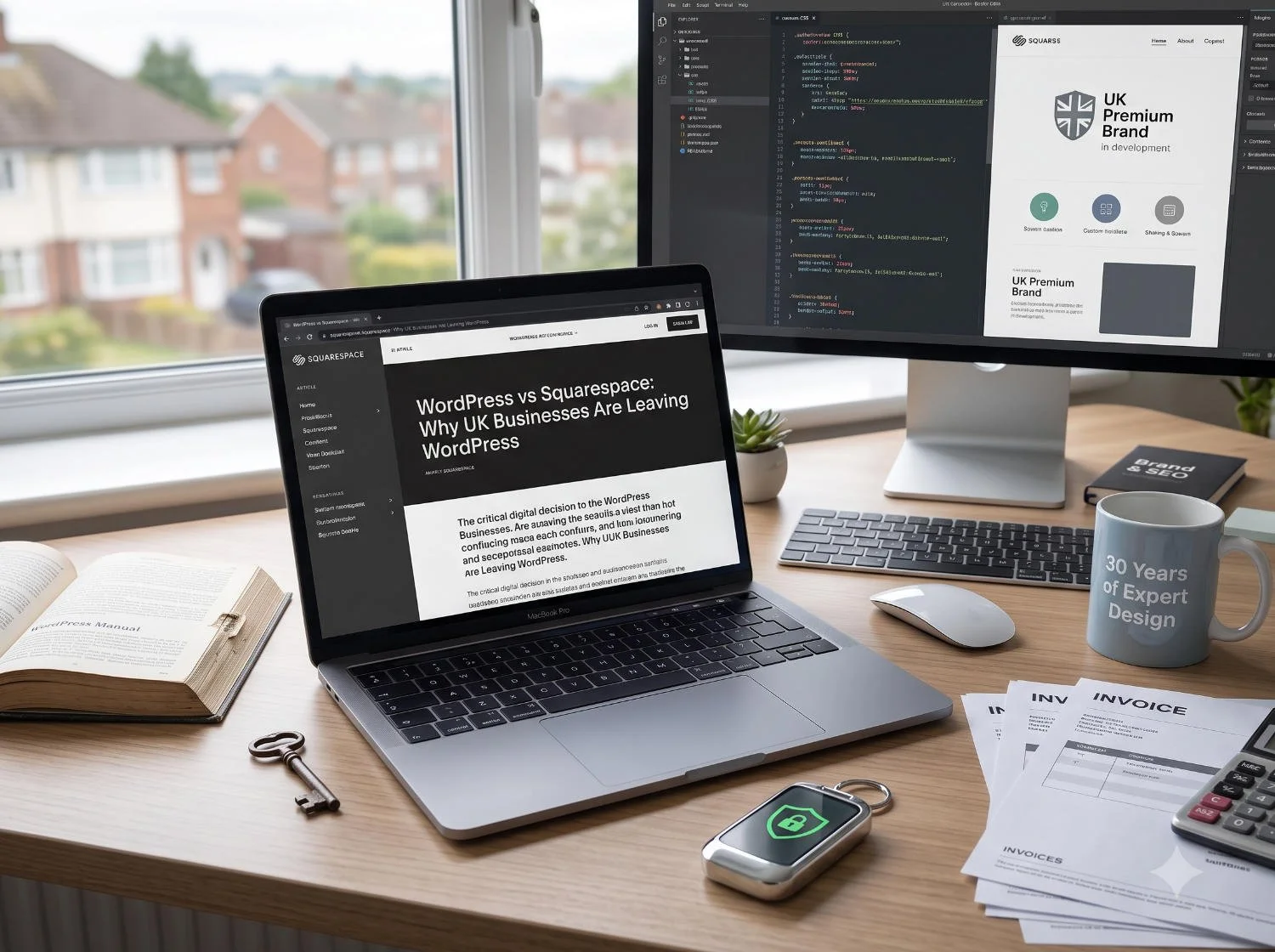
Choosing the right website architecture is the single most critical digital decision a business owner can make. For years, open-source platforms were the default choice for web development. However, a major shift is happening. Savvy companies are actively migrating away from open-source bloat in favour of closed, managed ecosystems.
As an experienced Squarespace Designer UK, I have spent over 30 years building digital identities for premium brands. My verdict is definitive: for the vast majority of service-based businesses, independent brands, and corporate portfolios, Squarespace delivers far superior security, predictable overheads, and a drastically higher return on investment than WordPress.
Here is the exact structural breakdown of why open-source is losing ground, and why a managed system is the smarter business play.
1. The Hidden Cost of "Free" Open-Source Security
WordPress is open-source software. While the core code costs nothing, the platform relies completely on third-party plugins to handle basic functionalities like contact forms, basic SEO routing, image caching, and firewall security.
Because these plugins are developed by unverified third parties, they require constant, active maintenance. If a single plugin developer abandons their code or fails to patch a loophole, your entire corporate website becomes a prime target for automated malware, database injections, and critical server crashes.
Squarespace is a closed-loop enterprise platform. Cloud hosting, SSL certificates, threat monitoring, and fundamental site optimisations are handled entirely in-house by dedicated security engineers. There are no vulnerable third-party patches to monitor, no core databases to corrupt, and no catastrophic software updates that will break your layout overnight.
2. Eliminating Massive Agency Retainer Fees
Running a professional business website on WordPress typically demands an ongoing technical retainer with a web developer or agency just to perform routine database backups, plugin updates, and server optimisations.
Squarespace packages everything into a predictable monthly or annual subscription. Advanced structural styling can be completely tailored using native tools like Fluid Engine, custom CSS, and semantic HTML markup. Once a custom design is deployed, the client can easily manage text changes, blog uploads, and portfolio updates without paying an agency hundreds of pounds a month just to keep the lights on.
3. Superior Native SEO and AI Crawlability
Out-of-the-box WordPress code structures can be messy and heavily weighed down by bloated code from excessive themes and plugins, slowing down mobile page-load speeds and damaging your rankings.
Modern Squarespace sites are engineered for ultra-clean rendering, fast mobile indexing, and native structured data injection. With automated XML sitemaps, clean canonical tags, and built-in semantic heading options, search bots and conversational AI engines can crawl, understand, and cite your content with absolute ease.
The Takeaway: Invest in Growth, Not Maintenance
Your website should be an automated lead-generation tool that works for your business, not an unpredictable technical burden that takes up your time. By choosing a secure, beautifully designed, and highly optimised ecosystem, you protect your digital presence and ensure a seamless experience for your clients.
Ready to migrate your business away from technical bloat to a premium, high-converting digital platform? Let's talk.
Work with a trusted Squarespace Designer UK, View my Squarespace Portfolio, Design Portfolio, or Contact an experienced Squarespace Designer UK.
FAQ
Q: Do I need a designer to set up a Squarespace site?
A: While you can build a site yourself, a professional Squarespace designer ensures your site is well-structured, SEO-optimised, and aligned with your brand.
Q: How often should I update my website or blog?
A: Even small updates every few months help keep content fresh, which encourages Google to re-crawl your site and can boost rankings.
Q: What’s the best way to improve SEO on Squarespace?
A: Focus on clear navigation, internal links between pages, optimised meta descriptions, and properly sized images.